


1Start with something manageable
Choose one small chore your child can practise with you. Putting shoes away is one place to start. Show them what finished looks like, then let them have a go. The aim this week is to find a useful contribution that fits your family's day.
2Make the routine visible
Write the chore somewhere your child can see it, or draw a picture if they are still learning to read. Try keeping it at the same point each day, such as before putting pyjamas on.
Do it together at first if that helps. A paper checklist is enough to try this.
3Let your child choose a goal
If you want to try rewards, offer a choice of goals you are happy to provide. Your child might choose the next family film or save towards something they want.
Agree how many points each chore earns and how many the goal needs. Keep a written tally so you can both see progress.
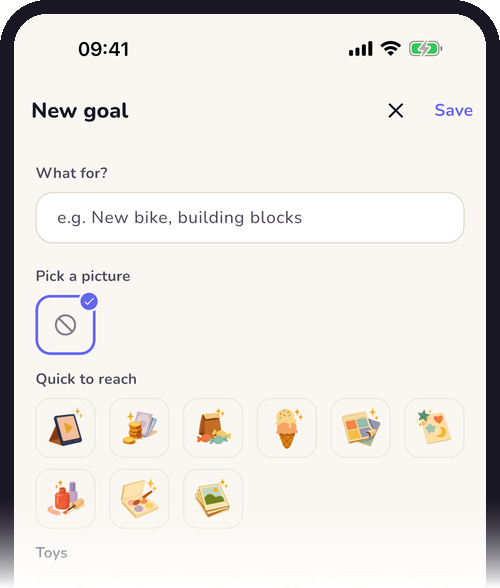
4Try one goal at a time
One goal is a good place to start because there is only one total to track. Choose something reachable within a timescale your child can understand.
If it feels too far away, agree a smaller first goal together. You can revisit the arrangement once you have tried it.
5Leave room for a different day
An outing or a tired evening may change the plan. You can help with the chore, or agree to pick up the routine tomorrow.
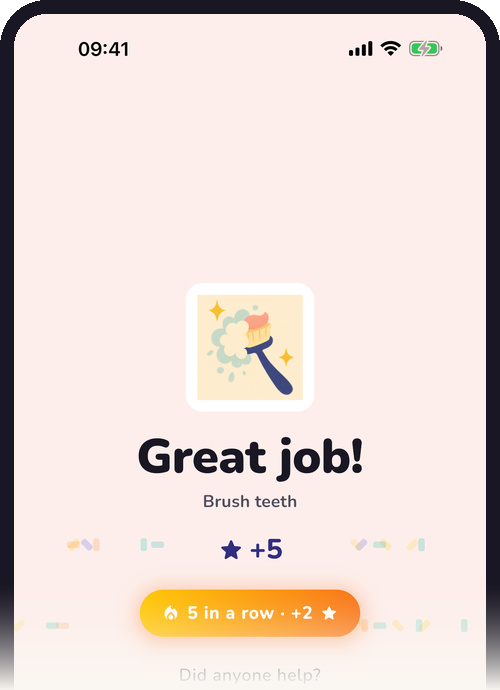
Keep points already earned. Treat the next day as another chance to contribute, rather than adding yesterday's chores to today's list.
6Talk after a week
Ask which part felt easy and where help was needed. Does the timing suit your child? Is the goal still something they want?
Choose one change together. If the chore is getting finished with an amount of support you can manage, that is a useful reason to keep trying.
What about screens and money?
Money or earned screen time can be options later if they fit your family's rules. Points towards one chosen goal are a simple first experiment.
If you introduce either reward, agree the amount beforehand. For screen time, also agree when it can be used.
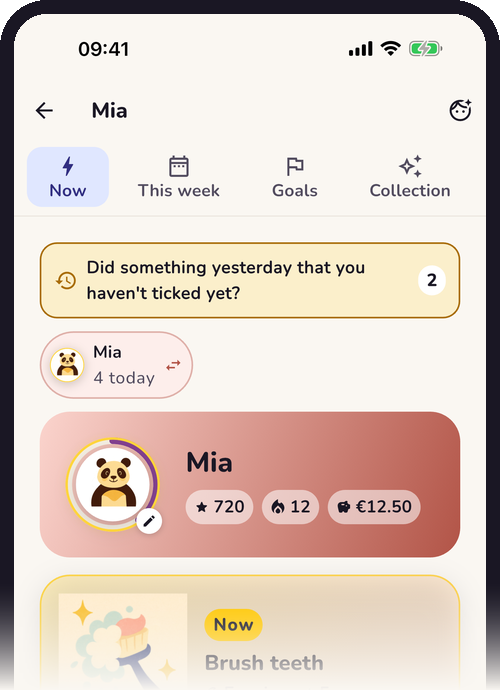
If you would like to try this in an app, Chorios lets your child choose a goal and earn points when they tick off chores. They can use a shared family tablet or their own device, while you see everyone's progress on one screen. See how it works
Frequently asked questions
At what age can children start?
Even a young child can help with a small job alongside you, such as putting toys in a box. Our ideas by age start at four. Start with what your child can safely manage; age is only a guide.
Should I pay for chores?
That is a family choice. You might keep everyday contributions unpaid and offer money for occasional extra jobs. If you use rewards, make the agreement clear before the chore starts.
What if my child refuses or loses interest?
Ask what feels difficult. Try doing the first step together, or choose a smaller chore. If you are using a goal, check whether they still want it before changing the reward.

Chorios is free.
Every chore and every child, for as long as you like.